Car Key Replacement
Losing your only car key on a frigid Chicago morning—or snapping a fob in half in a Edgewater parking lot off Bryn Mawr Avenue—isn't just inconvenient. It can strand you for hours if you call the wrong service. At Edgewater IL Locksmith, our mobile technicians come directly to your location anywhere in the Chicago area, equipped with the cutting machines, transponder programmers, and OEM-grade key blanks needed to get you back on the road the same day. We're insured, we answer at (773) 832-5820 around the clock, and we never start work until you've agreed to a firm, up-front quote.
Open 24 hours, 7 days a week · Licensed, bonded & insured
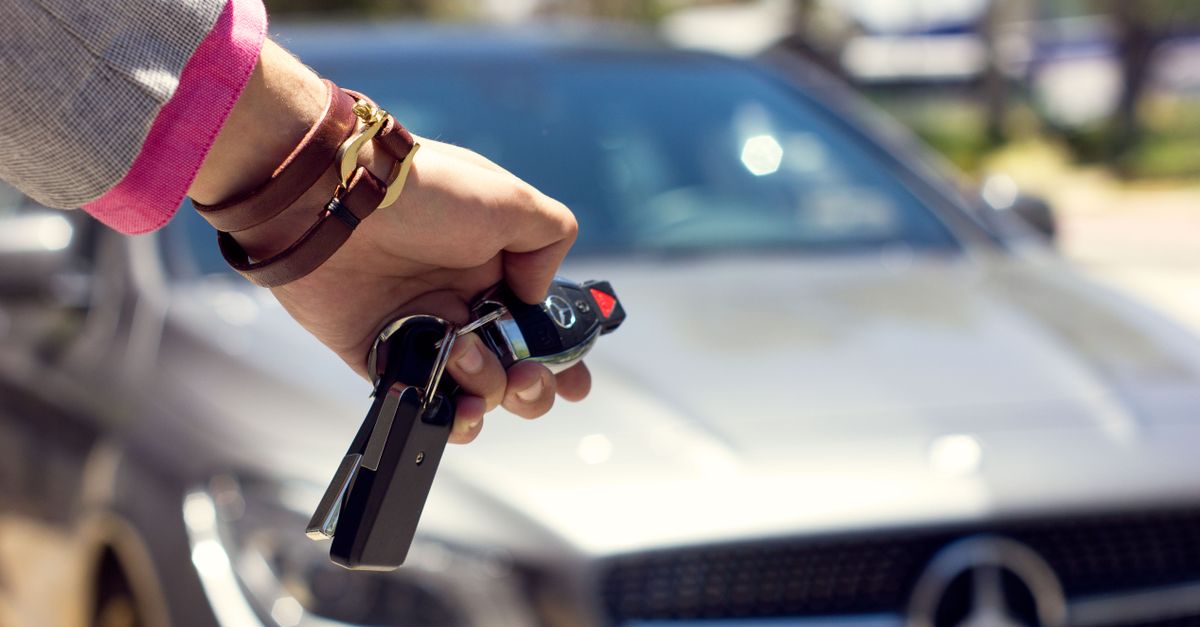
Modern vehicle keys are no longer simple metal cuts. From basic laser-cut keys to proximity smart keys and rolling-code key fobs, every car brand uses its own proprietary system—and getting that system wrong means a key that simply won't turn or a fob the car refuses to recognize. Our experienced technicians are trained on the specific protocols for domestic brands like Ford, Chevrolet, and Chrysler, European makes including BMW, Mercedes-Benz, Volkswagen, and Volvo, and Asian manufacturers such as Toyota, Honda, Hyundai, Kia, and Subaru, among others. The sections below break down exactly what's involved by brand family, so you know what to expect before we arrive.
What we do
Available 24/7
Day, night, weekends and holidays — a real local locksmith answers and rolls a fully-stocked van.
Fast local response
Based in Chicago, we reach the Chicago area in well under an hour.
Insured & background-checked
Vetted technicians, up-front pricing, and no surprise add-ons when we arrive.
Damage-free entry
We pick and bypass locks the right way, so most lockouts are solved without drilling anything.
Car Key Replacement by Brand: What the Cutting and Programming Process Actually Involves
Not all replacement keys are created equal, and the brand of your vehicle determines nearly everything: the key blank profile, the transponder chip frequency, the programming protocol, and whether your car requires a dealer-level PIN code to authorize a new key. For American brands—Ford, GM (Chevrolet, GMC, Buick, Cadillac), Ram, and Jeep—our technicians use on-board diagnostic (OBD-II) programming to write new transponder data directly to the vehicle's ECU. Ford's PATS (Passive Anti-Theft System) and GM's VATS and PassKey III systems each require specific sequences; skipping a step or using the wrong chip family results in a car that cranks but won't fire. We carry the blade blanks for common Ford H75, H84, and flip-key profiles, as well as GM double-sided keys and the high-security side-milled blades used on late-model Cadillac and Buick models.
European brands add another layer of complexity. BMW's EWS and CAS anti-theft modules, Mercedes-Benz's EIS/ESL systems, and Volkswagen/Audi's IMMO IV and IMMO V immobilizer generations all demand manufacturer-specific software and, in many cases, a dealer-supplied PIN. Our skilled technicians carry the professional-grade tools to access these systems without disassembling your dash or damaging trim panels—a priority we take seriously, especially on luxury vehicles where interior components are expensive to replace. For Volvo, we work with both the older Philips Crypto chip keys and the newer UHF remote fobs used on XC60 and XC90 models. If you drive a Land Rover or Jaguar, expect a similar level of security—and expect us to handle it. Need help now? Call (773) 832-5820 — we answer 24/7 and can dispatch a mobile unit to your exact Chicago location within the hour.
Automotive Locksmith Services for Japanese, Korean, and Other Asian-Brand Vehicles
Toyota and Lexus use the Texas Instruments DST-80 and AES transponder chips in most 2015-and-newer vehicles, along with Toyota's proprietary smart key system that requires both a mechanical emergency key cut and a proximity-fob programming sequence. Our technicians handle both steps on-site—no towing to a dealership required. Honda and Acura shifted to an internal immobilizer architecture around 2015 that requires 'all-key lost' procedures when you have zero working keys; this involves reading the vehicle's immobilizer data through the OBD port and regenerating a seed/key pair before any new transponder will be accepted. Hyundai, Kia, and Genesis models from 2018 onward use a rolling-encryption smart key that must be programmed with both the BCM and the cluster in communication—a process our mobile equipment handles in the field.
Subaru, Nissan, Infiniti, and Mazda each have their own transponder families and fob frequencies, and we stock blanks and chips for the most common platforms across all model years still on Chicago roads. One practical note for Chicago drivers: if you own a vehicle garaged in the city and your proximity fob battery dies in winter, the car will still start using the mechanical backup key concealed inside the fob—but you'll need to hold the fob near the start button while pressing it. We mention this not to replace our service, but because knowing this can get you to a warm location before calling us rather than waiting on a wind-swept Edgewater side street.
Emergency Locksmith Response — When Car Key Replacement Can't Wait
A lost or broken key at 2 a.m. outside a Rogers Park bar or in the underground parking beneath a Streeterville high-rise is a genuine emergency, and our 24/7 mobile dispatch model is built for exactly those moments. Unlike a shop-based service that opens at 9 a.m., our technicians are in the field around the clock across Chicago's 77 community areas. When you call (773) 832-5820, a live team member—not an answering service—takes your location, vehicle make, model, and year, confirms an exact price before dispatch, and routes the nearest qualified technician to you. There are no hidden fees added after the fact.
Emergency automotive calls introduce a few variables that affect your final quote: the time of day, how far our nearest technician is from your location, whether your vehicle requires a special-order blank we need to source, and the specific programming protocol your car demands. We explain every factor transparently so there are no surprises. What we never do is charge extra without telling you first—especially on emergency calls, when you're already in a stressful situation. Our insured technicians also carry liability coverage, meaning if something unexpected happens to your vehicle during service, you're protected.
Key Fob Programming, Smart Keys, and the Full Range of Services We Provide
Beyond straightforward car key replacement, our automotive locksmith capabilities cover the complete spectrum of modern vehicle security systems. Key fobs aren't just remote convenience devices—on many newer vehicles, the fob IS the key, and losing it means the car won't recognize a start command at all. Programming a new fob requires syncing it to the vehicle's BCM (Body Control Module), which on most 2018-and-newer domestic and import vehicles cannot be done through simple self-programming sequences described in owner's manuals. Our technicians use professional bi-directional scan tools to complete this process correctly on the first attempt, avoiding the 'too many failed attempts' lockout that some systems impose after repeated incorrect programming tries.
Here is a representative list of the specific services our mobile team performs across the Chicago area every day: (1) Transponder key cutting and programming — all chip families; (2) Laser/sidewinder high-security key cutting; (3) Proximity/smart key fob programming; (4) Remote head key replacement; (5) Flip-key shell and blade replacement; (6) All-keys-lost vehicle programming; (7) Key fob battery replacement and recase; (8) Broken key extraction from ignition; (9) Broken key extraction from door lock; (10) Ignition lock cylinder replacement; (11) Ignition switch repair; (12) Door lock actuator diagnosis and referral; (13) VAG (VW/Audi/Skoda/SEAT) IMMO IV and V programming; (14) BMW EWS/CAS key programming; (15) Mercedes-Benz EIS smart key programming; (16) Toyota/Lexus smart key and H-chip programming; (17) Honda/Acura all-keys-lost recovery; (18) Hyundai/Kia/Genesis smart key sync; (19) Ford PATS transponder programming; (20) GM PassKey/PassLock/VATS chip matching; (21) Chrysler/Dodge/Jeep/Ram SKIM transponder programming; (22) Subaru and Nissan transponder key service; (23) Motorcycle and powersport key cutting (select models); (24) Duplicate key cutting from a working original; (25) OBD-II vehicle diagnostic read to confirm immobilizer status before programming; (26) Residential rekeying and lock replacement (mortise lock, deadbolt, door knob lock); (27) Commercial locksmith services including mortise lock installation, master-key system setup, and access-control hardware.
Frequently asked questions
How much does a locksmith cost in Chicago for car key replacement?
There is no single flat rate because several factors shape the final price: your vehicle's make, model, and year (which determines the key type and programming complexity), the time of day you call, the travel distance from our nearest technician to your location, and whether a specialty key blank needs to be sourced. What we always do is confirm an exact, up-front price before any work begins—so you agree to the cost before we touch the car. Call (773) 832-5820 for a same-day quote.
How much should an emergency locksmith cost for a late-night car key call?
After-hours and emergency calls typically involve different pricing factors than daytime service—including technician availability and dispatch distance at odd hours. Rather than guess, we encourage you to call (773) 832-5820 any time, day or night; we'll take your vehicle details, explain every cost factor, and give you a firm quote before dispatching. We never add surprise fees after the job is done.
How much should a locksmith cost per hour, and do you charge by the hour?
Most automotive locksmith work—key cutting, transponder programming, fob syncing—is quoted as a per-job price rather than an hourly rate, because the time required varies significantly by vehicle brand and programming protocol. Some commercial locksmith and residential locksmith projects (such as a full mortise lock overhaul or a master-key system installation) may be broken down differently. In every case, we explain the pricing structure before work begins so you know exactly what you're paying for.
How to find a reputable locksmith in Chicago for car key service?
Look for a mobile locksmith that is insured, employs trained technicians (not subcontractors with unknown skill levels), operates 24/7 with a live phone line, and provides a written or verbal up-front price before starting. Ask specifically whether they carry the programming equipment for your vehicle's brand and year—many general locksmiths have basic tools but lack the bi-directional scan tools needed for newer European or Asian vehicles. Edgewater IL Locksmith meets all of these criteria. Call (773) 832-5820 to speak with our team directly.
Can you replace my car key if I have zero working keys left?
Yes. An 'all-keys-lost' situation is more involved than duplicating from a working original—it requires reading and resetting your vehicle's immobilizer data via the OBD port before any new key can be programmed—but it is well within our technicians' capabilities for the vast majority of makes and models on Chicago roads. We handle this for Honda, Toyota, Ford, GM, Hyundai, BMW, and many others. Call us and provide your VIN so we can confirm coverage for your specific vehicle before we arrive.
Where can I find a reputable locksmith in Chicago who also handles mortise locks and residential work?
Edgewater IL Locksmith is a full-service mobile locksmith, not just an automotive shop. Beyond car key replacement, our qualified technicians handle residential locksmith services—including door knob lock repair and rekeying—and commercial locksmith work such as mortise lock installation, high-security deadbolts, and master-key system design. Whether you've just moved into a Edgewater two-flat or need a commercial mortise lock upgraded at your Michigan Avenue office, we provide the same 24/7 mobile service, insured technicians, and up-front pricing. Call (773) 832-5820 anytime.
Locked out or need a lock fixed? We are on the way.
Open 24 hours, 7 days a week · Insured, background-checked technicians · Up-front pricing
(773) 832-5820