Broken Key Extraction
A snapped key is one of those frustrating moments that can derail your entire day — whether it happens at your front door on a frigid Chicago morning or in your car ignition on a packed Winthrop Avenue side street in Edgewater. The metal shank of a worn key can shear off cleanly or splinter inside the keyway, leaving a fragment lodged so deep that fingers, tweezers, and YouTube tutorials are powerless against it. Edgewater IL Locksmith is a 24/7 mobile locksmith team serving the Chicago area, and we dispatch directly to your location — no tow truck, no waiting at a shop — to recover that broken piece and get you moving again.
Open 24 hours, 7 days a week · Licensed, bonded & insured
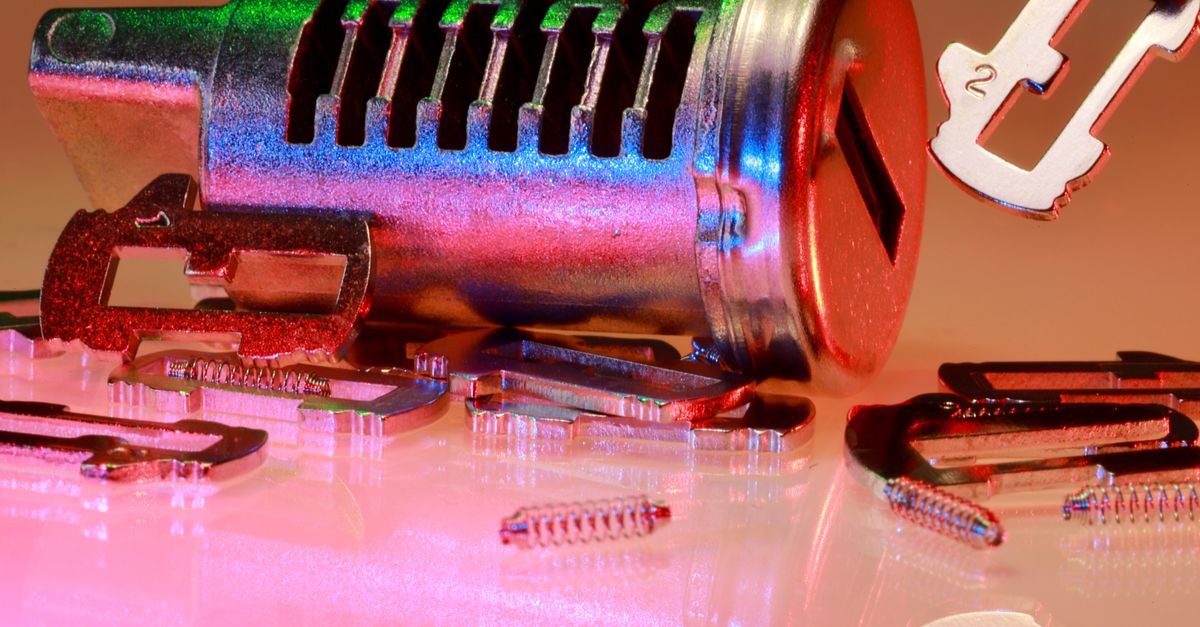
What makes broken key extraction genuinely tricky is that every lock and every ignition presents different tolerances, depths, and materials. A mortise lock on a vintage Edgewater greystone has tighter internal clearances than a modern door knob lock on a new-build condo. A car ignition wafer stack behaves differently from a deadbolt pin tumbler. Our trained and insured technicians carry a full kit of purpose-built extraction tools and approach every job with the goal of removing the fragment without damaging the lock body — so you avoid the extra cost and hassle of a full lock replacement wherever possible.
What we do
Available 24/7
Day, night, weekends and holidays — a real local locksmith answers and rolls a fully-stocked van.
Fast local response
Based in Chicago, we reach the Chicago area in well under an hour.
Insured & background-checked
Vetted technicians, up-front pricing, and no surprise add-ons when we arrive.
Damage-free entry
We pick and bypass locks the right way, so most lockouts are solved without drilling anything.
Why Keys Snap — and Why It Matters for Your Lock
Keys break for predictable reasons: metal fatigue from years of daily use, a lock cylinder that has become stiff due to a lack of lubrication or debris accumulation, forcing a key that was already bent, or using a worn duplicate that was cut slightly off-spec. Chicago's climate accelerates the process — freeze-thaw cycles cause door frames to shift, putting lateral stress on keys every single winter. When a key finally snaps, the break point is almost always inside the cylinder, not outside it, because that is the narrowest part of the keyway where torque is greatest. The fragment can sit flush with the face of the plug, sit deep inside the cylinder, or — in the case of an automotive ignition — lodge behind the wafer stack entirely. Each scenario requires a different technique and a different set of extraction tools, which is why a professional assessment matters before anyone starts probing around inside your lock.
The lock or ignition itself is not automatically ruined when a key breaks inside it. Whether it survives intact depends largely on what happens next. Attempts to dig the fragment out with a bobby pin, a pocket knife, or a screwdriver blade frequently score the soft brass of the cylinder walls, dislodge the driver pins out of their correct positions, or push the broken piece deeper into the housing. If the cylinder is damaged during a DIY extraction attempt, what started as a straightforward broken key extraction job can turn into a full cylinder re-key or replacement — adding time and cost to an already stressful situation. Our technicians assess the fragment's position with a light and a pick probe before touching it, so the approach is deliberate rather than experimental.
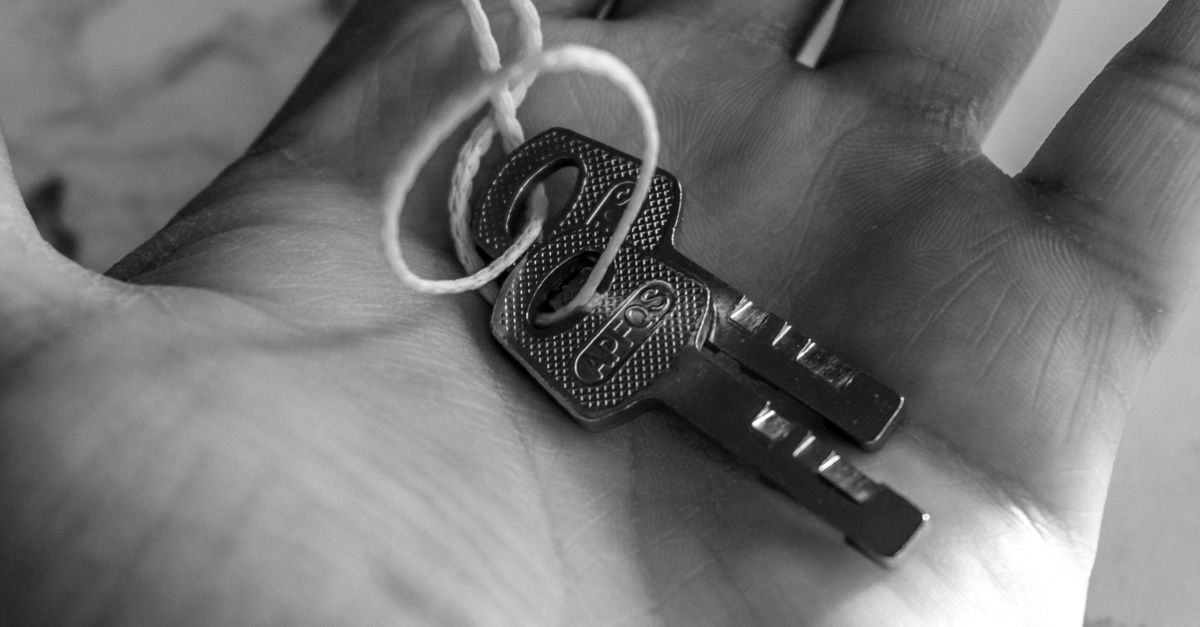
Broken Key Extraction: Residential Locks, Mortise Locks, and Door Knob Locks
Residential properties in Edgewater and across Chicago run the full spectrum of lock hardware. Many of the neighborhood's older two- and three-flats along North Sheridan Road still use classic mortise locks — the large rectangular cartridge set deep into the door edge, operated by a separate knob and a thumb-turn or key cylinder. Mortise lock cylinders sit in a threaded collar and can sometimes be unscrewed and brought to the bench for extraction, which is often the gentlest approach for a stubborn fragment. Newer buildings tend to feature cylindrical door knob locks or lever-handle locks, where the cylinder is more accessible from the face but the keyway profile can be narrower. Our technicians are experienced with both formats as well as deadbolts, rim locks, padlocks, and euro-profile cylinders found on sliding patio doors.
For mortise lock jobs in particular, the age of the hardware matters. A 1920s Corbin or Yale mortise lock has softer brass innards and shallower keyways compared to a modern high-security mortise cylinder, and the extraction technique adjusts accordingly. We bring extractor hooks in multiple sizes, spiral extractors, and — when needed — a broken key extractor set matched to the specific keyway profile of the cylinder. The goal is always a damage-free removal that leaves the lock fully functional so you can use your spare key or have the lock re-keyed on the spot. If the cylinder is already compromised before we arrive, we carry replacement cylinders that can be keyed to your existing key for continuity. Call (773) 832-5820 any time — our mobile units are staged across Chicago and can reach most Edgewater locations quickly, even during rush hour on Broadway.
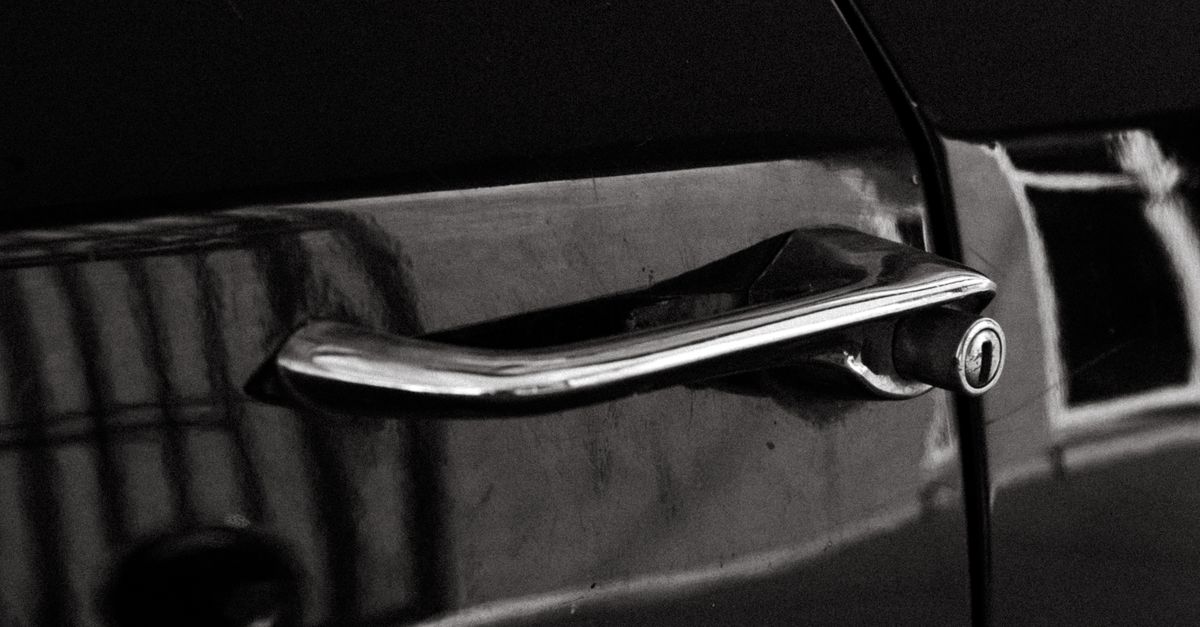
Automotive Broken Key Extraction — Ignitions, Door Locks, and Trunk Cylinders
A key snapping in a car ignition is a distinct category of problem, and it is one where urgency and precision intersect. Unlike a door lock where gravity is your ally, an ignition cylinder is oriented horizontally, meaning the fragment can roll or settle in ways that make hook extraction more difficult. Some ignition designs require the steering column to be in a specific position — locked or unlocked — before the cylinder can be accessed properly. Our automotive locksmith technicians understand these variables across a wide range of domestic and import vehicles. Whether you drive a Subaru, a Ford F-150, or a Chevrolet, we know how the ignition wafer stack is arranged and what clearance we have for maneuvering an extractor inside it.
Car door lock cylinders and trunk cylinders present their own challenges. The rods and retaining clips behind these cylinders mean there is limited room to work, and a fragment pushed into the wrong position can jam the connecting rod and render the whole lock assembly inoperable from the outside. Our technicians approach automotive extraction as a mechanical puzzle rather than a brute-force task, using illuminated picks and purpose-built hook extractors to grip the broken shank's serrations and draw it outward cleanly. Once the fragment is out, we can also cut a new key on-site — including transponder-chipped keys for most vehicle makes — so you are not left stranded. If you are stuck in a parking garage off North Clark Street or on the lakefront near Kathy Osterman Beach, we come to you.
Commercial Locksmith Services — Emergency Locksmith Response for Businesses
Business owners face a compounding problem when a key breaks: access disruption ripples outward to employees, customers, deliveries, and security protocols. A broken key in the front door cylinder of a Edgewater retail shop or restaurant on Granville Avenue during opening time is an emergency locksmith situation — every minute of delay has a tangible cost. Our commercial locksmith team responds 24/7, including early mornings before business hours, late nights after closing, and weekends when the standard locksmith market is thin. We prioritize restoring access as quickly as possible while documenting the work in a way that satisfies property managers and commercial lessees who need a record for their files.
Commercial properties frequently use high-security mortise lock hardware, master-key systems, and access-control cylinders that require a higher level of technical knowledge than a basic residential deadbolt. Our technicians are trained on commercial-grade cylinders including restricted keyway systems, and we carry the specialized extractors needed for tight-tolerance high-security keyways. After the fragment is removed, we can re-key the cylinder to invalidate any outstanding copies of the broken key — a security step that is especially important in a business setting where key control matters. For larger commercial accounts across Chicago that want ongoing locksmith support, we offer a direct-dial relationship so the right technician reaches you fast. How much should an emergency locksmith cost for a commercial call? The quote is always confirmed up front before any work begins, with the final price shaped by the type of lock, the complexity of the job, and the time of day — never a surprise invoice after the fact.
How Pricing Works and What Determines Your Quote — No Surprises
One of the most common questions we hear is 'How much does a locksmith cost in Chicago?' or 'How much should a locksmith cost per hour?' — and the honest answer is that broken key extraction pricing is not one-size-fits-all. Several factors shape the final number: the type of lock or ignition (a basic door knob lock cylinder costs less to service than a restricted-keyway commercial mortise lock), the depth and position of the fragment, whether the cylinder needs to be replaced rather than salvaged, the time of day (overnight and holiday calls reflect the cost of 24/7 availability), and travel distance from our nearest unit to your location. Parts — a replacement cylinder, a new transponder key, or a re-key service — are itemized separately so you see exactly what you are paying for.
People sometimes ask 'Where can I find a reputable locksmith in Chicago?' or 'How to find a reputable locksmith in Chicago?' — the clearest signal of trustworthiness is an upfront quote given before any work is performed. We provide exactly that: a firm price confirmed over the phone or in person, based on a genuine assessment of the job, before a single tool touches your lock or ignition. There are no 'service call fees' that mysteriously balloon once the technician is on-site. Our technicians are insured, which protects you and your property. We identify ourselves clearly when we arrive, and we are happy to provide proof of insurance on request. 'How much should an emergency locksmith cost?' — enough to reflect skilled professional labor and 24/7 availability, and no more. Call (773) 832-5820 to get your honest, obligation-free quote right now.
25 Specific Services We Provide Across Chicago and Edgewater
Our mobile locksmith team handles a wide range of residential, automotive, and commercial lock and key needs — here is a precise look at what we offer: (1) Broken key extraction from residential deadbolts. (2) Broken key extraction from mortise lock cylinders, including vintage hardware on Chicago greystones. (3) Broken key extraction from door knob lock cylinders. (4) Broken key extraction from car ignitions. (5) Car door lock cylinder fragment removal. (6) Trunk cylinder broken key extraction. (7) On-site key cutting for residential locks after extraction. (8) Transponder key programming after automotive extraction. (9) Residential lock re-key following extraction, so old key copies are invalidated. (10) Full mortise lock cylinder replacement when extraction is not viable. (11) Deadbolt installation and upgrade. (12) High-security lock installation — Schlage, Kwikset, and equivalent grades. (13) Residential lockout service — door knob lock and deadbolt. (14) Automotive lockout service for all vehicle types. (15) Commercial lockout response — 24/7 emergency locksmith dispatch. (16) Commercial mortise lock repair and replacement. (17) Master-key system design and re-key for commercial properties. (18) Access-control cylinder replacement and re-key. (19) Padlock removal and replacement. (20) Euro-profile cylinder extraction and replacement. (21) Mailbox lock re-key and replacement. (22) Storage unit lock cutting and replacement. (23) Safe lock assessment and opening — non-destructive where possible. (24) Door hardware repair — broken actuators, worn cam mechanisms, seized mortise cases. (25) Security consultation for Edgewater residential and commercial properties, including key-control recommendations and lock-grade upgrades suited to Chicago's urban environment.
Every service on this list is performed by our mobile team on-site, which means no transporting your vehicle or hauling your door hardware to a shop. We bring the tools, the parts inventory, and the expertise directly to you — whether that is a vintage apartment building near the Bryn Mawr Red Line stop, a lakefront condo, a Granville Avenue storefront, or a parking structure anywhere in the broader Chicago area.
Chicago Locksmith Coverage — Edgewater and the Surrounding Neighborhoods
Edgewater sits at the northern edge of the lakefront, bounded roughly by Foster Avenue to the south and Devon Avenue to the north, with the Red Line running up Broadway as the neighborhood's spine. It is a dense, walkable neighborhood with a mix of century-old apartment buildings, modern condos, busy commercial strips, and proximity to Loyola University Chicago. That density means lock calls are genuinely diverse — from old mortise hardware in landmarked courtyard buildings to modern keyway cylinders in new-construction units, to car lockouts in the tight parking garages under the high-rises along Sheridan Road. Our team knows this area from street level, not from a map.
Beyond Edgewater, our mobile units cover the broader Chicago area including Rogers Park, Andersonville, Uptown, Lincoln Square, Ravenswood, and into the Loop and South Side as needed. As a Chicago locksmith operation, we understand that a city of nearly three million people has lock emergencies at every hour — a snapped ignition key at 2 a.m. near Lake Shore Drive is just as real an emergency as a front door broken key at noon. Our 24/7 availability is not a marketing phrase; it is the operational reality that defines how we staff and deploy. Whenever and wherever a key breaks in Chicago, we are a single call away.
Frequently asked questions
Can a broken key be extracted without replacing the entire lock?
In the majority of cases, yes. If the lock cylinder has not been damaged by prior extraction attempts, our technicians can remove the fragment cleanly using precision extraction tools sized to the keyway profile. The cylinder stays intact and fully functional. Replacement is only necessary when the cylinder walls are already scored, the plug is cracked, or the fragment has caused a mechanical failure inside the lock body — and we will tell you which situation you are in before any work begins.
How much does a locksmith cost in Chicago for a broken key extraction job?
There is no flat universal rate because the job complexity varies significantly. The factors that determine your quote include the type of lock or ignition involved (a mortise lock cylinder has different labor requirements than a standard door knob lock), the fragment's position inside the cylinder, the time of day, travel distance to your location, and whether any parts — a new cylinder, a replacement key, or a re-key service — are needed afterward. We confirm an exact up-front price before any work starts, so you are never surprised by the final invoice.
How much should an emergency locksmith cost for an overnight or weekend call?
Emergency locksmith calls outside standard business hours reflect the real cost of maintaining 24/7 staffing and mobile deployment. That is a legitimate component of any honest quote. What you should expect from a reputable locksmith — including us — is that this is disclosed clearly upfront, not added quietly to the bill afterward. We give you the complete price before we begin, accounting for the time of day, location, and the specific work required.
Is it safe to try removing a broken key myself before calling a locksmith?
We strongly advise against it. The interior of a lock cylinder is precision-machined to very tight tolerances. Inserting a bobby pin, a knife blade, or a flathead screwdriver can push the fragment deeper into the housing, score the cylinder walls, or knock the driver pins out of their spring channels. Any of these outcomes converts a straightforward extraction into a cylinder replacement. The safest and most cost-effective approach is to leave the fragment untouched and call (773) 832-5820 so a trained technician can assess the position before touching it.
How do I find a reputable locksmith in Chicago and know I can trust them?
The clearest indicators of a trustworthy locksmith are: they give you a confirmed price before any work begins, they arrive in an identifiable vehicle and can provide proof of insurance on request, and they assess the job before quoting rather than giving a suspiciously low phone quote and then revising it after arrival. Our team meets all of these standards — we are insured, we quote upfront, and our technicians identify themselves clearly on arrival. If you want to verify our legitimacy, call (773) 832-5820 and ask us directly — we welcome the question.
Do you carry replacement keys and cylinders on your mobile units for same-visit completion?
Yes. Our mobile units are stocked with key blanks for residential locks and the most common automotive key types, including transponder-chipped keys that we can program on-site for many vehicle makes. We also carry replacement cylinders in standard residential and commercial grades, so if your cylinder needs to be replaced rather than salvaged, we can often complete the full job in a single visit — extraction, replacement, and re-key if needed — rather than leaving you with a temporary fix that requires a return trip.
Locked out or need a lock fixed? We are on the way.
Open 24 hours, 7 days a week · Insured, background-checked technicians · Up-front pricing
(773) 832-5820